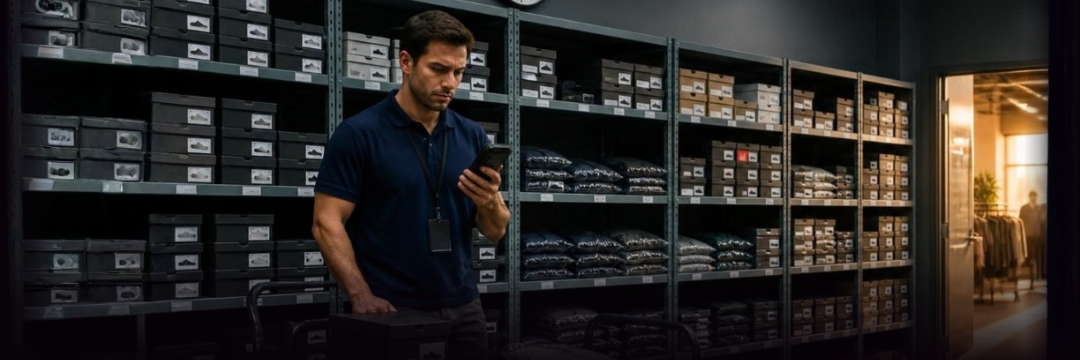
Traditionally, because of the labor requirements and high third-party execution costs, manual inventory counts are performed annually or bi-annually. The repercussions of this are that any counting errors are not corrected for six months or more. During this time, while inventory-related problems persist, many customers feel the impact of incorrect inventories; as a result, sales suffer.
Enter RFID technology: the time-saving, accuracy-boosting, easy-to-use tool for stock taking and supply chain management.
RFID has revolutionized how retailers assess on-hand stock and view inventory throughout their supply chain. That said, questions remain about how to implement the technology once the need for better inventory visibility is identified. Additionally, retailers want to determine how they will demonstrate a return on their investment. While in many applications leveraging RFID is based on attaining an accurate real-time view of inventory, the path to RFID implementation requires a tailored approach. This individual strategy highlights the retailer’s specific goals and, in doing so, eliminates risk.
Why RFID?
RFID helps retailers in many ways. These include improved inventory accuracy, a more insightful view of the supply chain, and use-cases that leverage the better visibility. These use-cases directly help organizations provide omnichannel offerings that effectively navigate a post-COVID-19 marketplace. Nowadays, customers expect to have multiple ways to make a purchase, without encountering cancelled orders or other complications.
Retailers who don’t implement RFID technology would have to take stock checks manually and could expect item level inventory accuracy of ~70%. However, retailers who implement a ClarityRFID solution can expect accuracy rates of ~98%. This approach significantly improves the customer experience, and the inventory exposed to online and BOPIS (Buy Online Pickup In-Store) sales. RFID technology is a perfect catalyst for a successful BOPIS and omnichannel strategy, as it directly addresses the main pain points of those processes.
When “nice to have” becomes “need to have”
Before the COVID-19 pandemic, when most business activity was done in-store, many retailers viewed their online and omnichannel offerings as a secondary contributor to sales. When the pandemic placed the total weight of generating sales on digital and omnichannel offerings, it became apparent that a “nice to have” had become a “need to have”.
During the pandemic and afterward, retailers began placing more emphasis on delivering a consistently positive online and omnichannel experience. Because store associates need to quickly and accurately find and pull items for shipment or BOPIS pickup, a reliable view of inventory is the first step to reaching that goal. Moreover, ensuring item-level inventory accuracy saves labor and ensures items are easily available for customer pickup. Ultimately, this RFID technology enables retailers to future-proof operations and ensure survival in the new retail era.
The implementation process
Implementing RFID technology is a straightforward and collaborative process between the customer and the technology provider. When using ClarityRFID, our team guides each customer through the process to ensure a straightforward and successful RFID implementation.
Step one is to identify the unique challenges the retailer is experiencing, and define in specific terms what goal is to be achieved from implementing RFID. Identifying bottlenecks, inefficiencies, and areas of opportunity help implement a solution that is tailored to address the organization’s priorities. This allows delivery of the quickest ROI possible, while builds a foundation for long-term goals for growth. During this step, it’s also important to set parameters of what a successful implementation looks like. Use quantitative measurements to define success.
Before implementing RFID, retailers should have an understanding of operational processes and clearly define goals for areas of improvement; e.g., retail locations, supply chain. This allows the RFID provider to recommend the correct technology solution, based on item volume and the organizational layout. Let us guide you through each aspect of RFID implementation, from tag selection and proof of concept to a successful organizational rollout.
The pilot proves the business case for RFID adoption
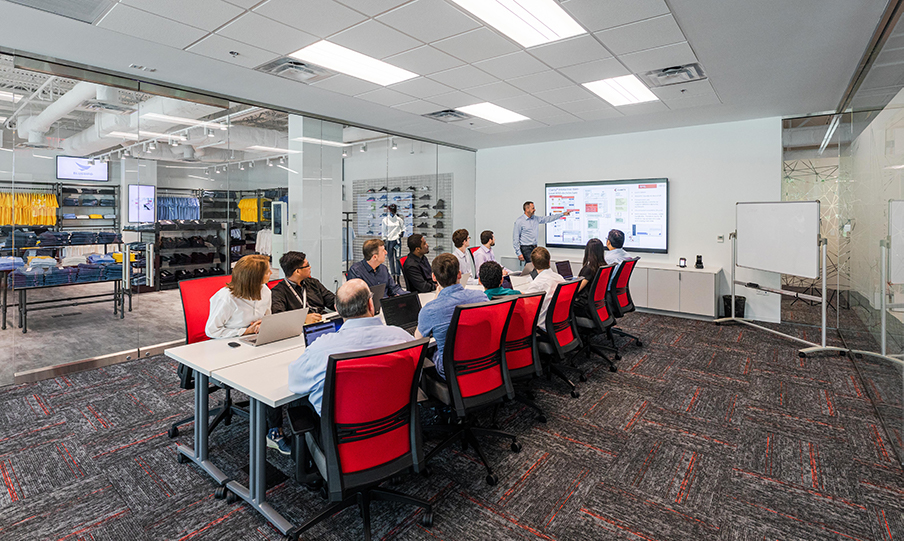
Once objectives are clearly identified and operational goals are aligned, the next implementation step is the pilot phase. The pilot gives a real-world view of the successes, opportunities, and key learnings related to implementing RFID. During the pilot period, quantifiable data is captured to prove the business case for RFID adoption. As well, the information collected and analyzed identifies opportunities for improvement, before a full organizational rollout is implemented. Once the organization has a full view and a complete understanding from the pilot, RFID solutions are ready to be rolled-out. Applying this approach achieves the fastest possible ROI at scale, fuels improved customer experiences, and increases sales.
The impact an accurate inventory has on a retail business cannot be overstated. As an organization begins to see the improvements, particularly in operational efficiency, reduced costs, and sales growth across multiple channels, they will thrive in this new retail era.
To discover how RFID technology can benefit your business, visit our resources page or contact us.